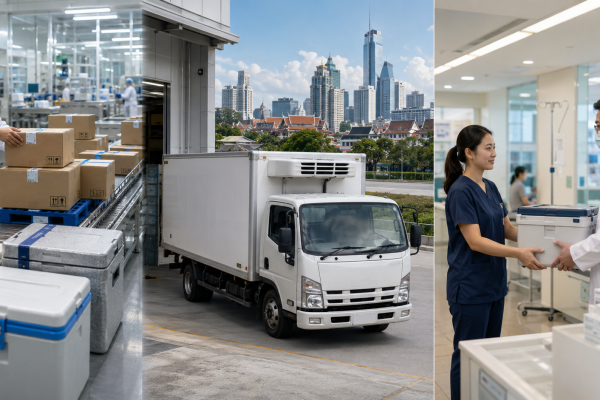








Explore how pharmaceutical distribution works across Southeast Asia, from cold chain logistics and warehousing to reliable last-mile delivery

Southeast Asia's pharmaceutical market continues to attract companies seeking to bring new products to patients across Malaysia, Singapore, Indonesia, and the Philippines, with the ASEAN pharmaceutical sector valued at over US$40 billion and projected to keep growing at a compound annual rate of more than 8% through the remainder of the decade, according to industry data reported by Source of Asia, citing Statista. Yet gaining regulatory approval and securing a place on pharmacy shelves is only part of the journey. Between a product leaving a warehouse and reaching the patient who needs it lies a distribution chain that must remain reliable across vastly different terrains, infrastructure standards, and market conditions, often for temperature-sensitive products where a single delay can affect product integrity.

This final stage, commonly referred to as the last mile, is where the practical realities of the region are most apparent. A shipment that moves smoothly through a modern port or airport can face a very different set of conditions once it leaves an urban distribution centre, and understanding this difference is essential for any principal evaluating how their products reach the market.
Pharmaceutical distribution Southeast Asia

Understanding the Pharmaceutical and Medical Devices Distribution Chain

  • Getting a product to the patient typically involves several distinct stages, each carrying its own regulatory and operational requirements:
  • Registration and market authorisation, confirming the product meets local regulatory standards before it can be distributed (explored in more detail in our look at Southeast Asia's regulatory landscape for pharmaceutical market entry.
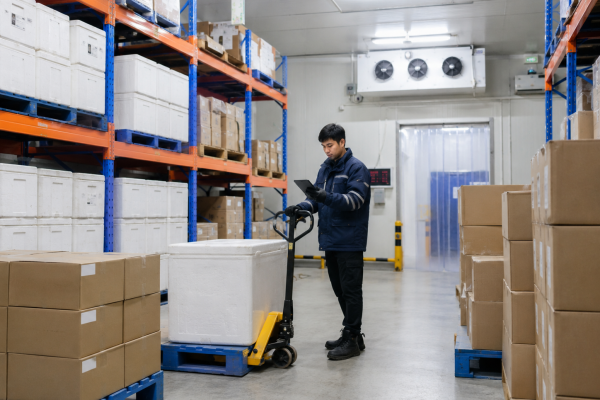
  • Warehousing, including temperature-controlled storage for biologics, vaccines, and other sensitive products
  • Transport between distribution hubs, moving stock from central warehouses to regional or state-level facilities
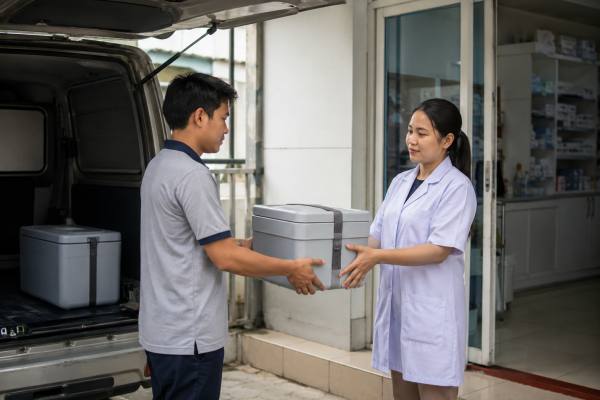
  • Last-mile delivery, the final movement of stock from a local facility to the pharmacy, clinic or hospital dispensing it to patients

Each stage depends on the one before it. A well-managed product registration and warehousing process can still be undermined by an inconsistent or poorly resourced last-mile delivery network, which is why distribution capability needs to be assessed end-to-end rather than at any single stage in isolation.

Healthcare distribution Southeast Asia

The Last-Mile Challenge Across Southeast Asia

Southeast Asia's geography means that last-mile delivery can look quite different depending on where a product is headed. Established urban centres, such as the Klang Valley in Malaysia, Singapore or metro Manila, benefit from well-developed road infrastructure and a high concentration of pharmacies and hospitals, supporting frequent and predictable delivery schedules. Other parts of the region call for a different approach, whether that means covering longer distances, working with varying transport infrastructure, or coordinating deliveries across more geographically dispersed markets.

This is not a gap that can be solved with a single, standardised approach. It requires distribution partners with established local infrastructure and route knowledge across every market they serve, rather than a single regional model applied uniformly.

What Strong Last-Mile Capability Requires

  • A distribution partner capable of consistently reliable last-mile delivery typically demonstrates the following:
  • Validated cold chain infrastructure suited to each market's climate and transport conditions
  • Established relationships with pharmacies, clinics, and hospitals across each market served
  • Contingency planning for delays or disruptions across different transport conditions
  • Local warehousing that is positioned to reduce the distance and time between the distribution hub and the point of care
  • Clear visibility and tracking throughout the journey, so any disruption can be identified and addressed quickly

Principals evaluating a distribution partner benefit from asking not only how a product will reach the market, but how it will reach every part of the market.

As more principals look to Southeast Asia as a long-term growth market, the strength of a distribution partner's last-mile capability will remain one of the clearest indicators of whether a product can be delivered consistently, safely, and at scale across the region's diverse markets.

At EP Plus Group, our distribution network supports principals across Pharmaceuticals, Medical Aesthetics, Fertility Sciences, and Medical Nutrition, connecting all business units to healthcare providers throughout Southeast Asia's diverse markets. Built on validated cold chain infrastructure and established relationships with pharmacies, clinics, and hospitals across the region, our network is designed to move products reliably from principal to point of care.

Pharmaceutical logistics Southeast Asia

To learn more about how we help principals deliver their products across Southeast Asia, visit www.epplusgroup.com or get in touch with our team.


Share this post